
Ragdoll vs Maine Coon: Breed Comparison Guide
714 views
Choosing between a Ragdoll and a Maine Coon sounds easy until you've spent a few hours reading conflicting advice. One owner swears Maine Coons are "dog-like." Another insists Ragdolls are the ultimate lap cats. Then you discover that both breeds can weigh over 15 pounds, both enjoy human company, and both have luxurious coats that somehow end up on every black shirt you own.
The differences aren't always obvious.
Living with either breed is less about internet stereotypes and more about understanding how they fit into your home, your schedule, and even your vacuum cleaner's workload. Here's what actually matters before bringing one home.
At a Glance
Feature | Ragdoll | Maine Coon |
|---|---|---|
Origin | California, USA | Maine, USA |
Average Weight | 10–20 lbs (4.5–9 kg) | 10–25 lbs (4.5–11.3 kg) |
Height | 9–11 inches | 10–16 inches |
Body Type | Long, muscular, soft | Large, rugged, athletic |
Coat | Silky, semi-long | Dense, water-resistant |
Grooming | 2–3 times weekly | 3–4 times weekly |
Energy Level | Moderate | Moderate to High |
Lifespan | 12–17 years | 10–15 years |
Good With Children | Excellent | Excellent |
Good With Dogs | Usually | Usually |
Common Health Concerns | Hypertrophic cardiomyopathy (HCM), bladder stones | HCM, hip dysplasia, spinal muscular atrophy (SMA) |
They May Look Similar. They Aren't.
At first glance, they're both large, fluffy cats.
Spend a week with each, though, and their personalities start separating quickly.
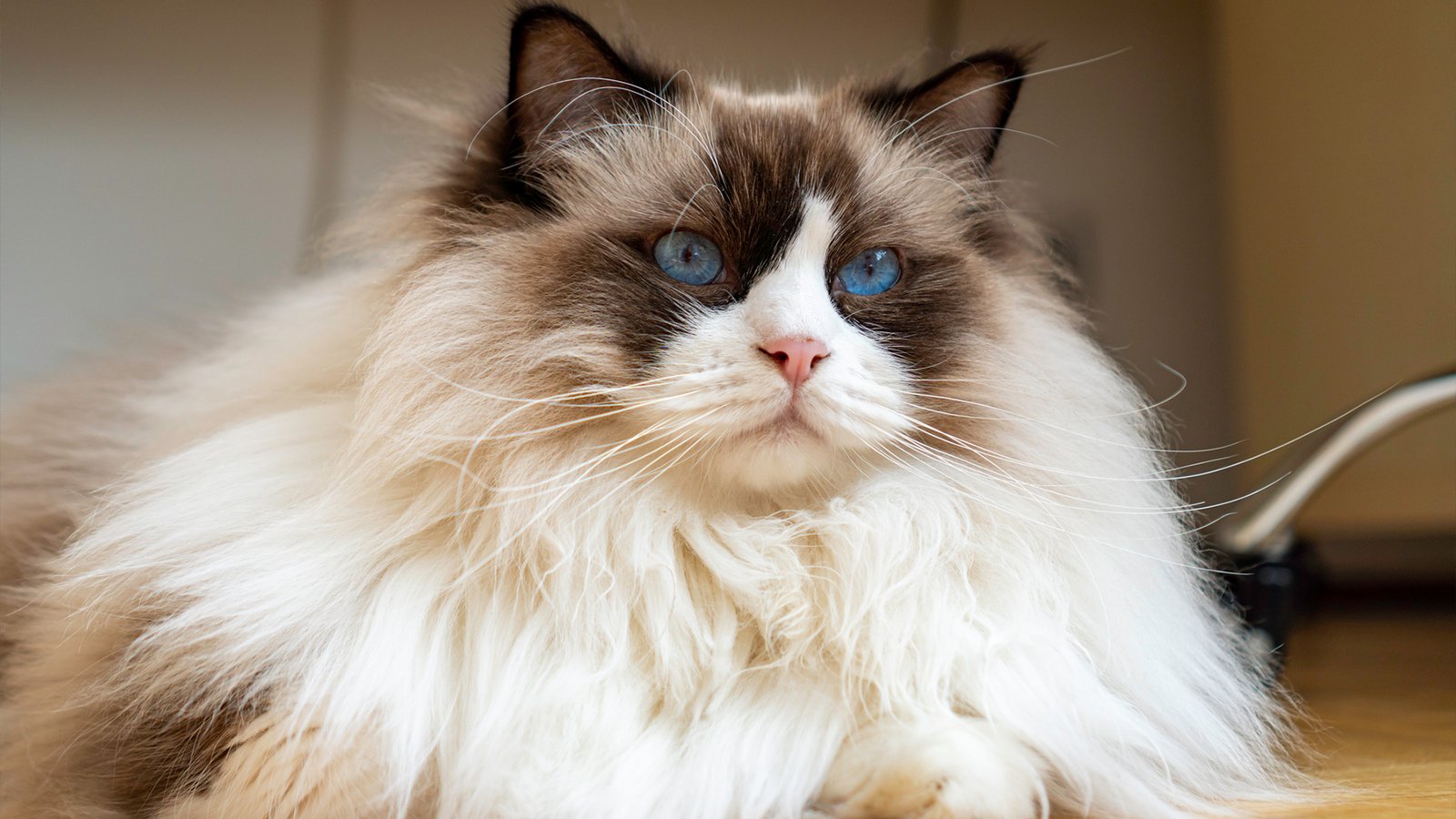
A Ragdoll often follows you from room to room, waits outside the bathroom, then quietly curls beside you while you work. Pick one up and many relax completely—almost going limp, which inspired the breed's name.
A Maine Coon behaves differently.
Instead of melting into your arms, it usually wants to investigate whatever you're doing. Opening a cabinet? Expect company. Assembling furniture? They'll supervise. Running water in the sink? They'll probably stick a paw into it.
That curiosity stays throughout adulthood.
Size Isn't Just About Weight
People often compare the numbers.
That's only part of the story.
Maine Coons are among the largest domesticated cat breeds recognized by major registries like the Cat Fanciers' Association (CFA) and The International Cat Association (TICA). Mature males commonly reach 18–22 pounds, while exceptional individuals exceed 25 pounds without being obese.
Ragdolls are also substantial cats, but they carry their weight differently.
Their bodies feel softer and less rectangular. Maine Coons have broader shoulders, thicker bone structure, and noticeably larger paws—traits believed to have helped early cats survive harsh New England winters.
Growth is another surprise.
Most domestic cats reach adult size around one year.
Not these two.
A Ragdoll often matures around three years of age. Maine Coons can continue developing muscle and body mass until they're four or even five years old. New owners sometimes worry their young Maine Coon is "too skinny," only to watch it fill out gradually over several years.
Personality: Calm Companion or Curious Explorer?
This is where the choice becomes much easier.
Ragdoll
If your idea of the perfect evening involves reading, watching movies, or working from home, Ragdolls usually adapt beautifully.
They're affectionate without being demanding.
Many happily sleep beside their owners for hours. They're also among the breeds most likely to greet family members at the door instead of hiding under the couch.
That said, don't mistake calm for lazy.
Mine have still chased feather toys across the hallway with surprising speed. They simply don't stay in "zoomie mode" very long.
Maine Coon
A Maine Coon tends to stay playful longer.
Sometimes much longer.
Owners regularly report five-year-old Maine Coons sprinting after laser pointers as enthusiastically as kittens. Interactive puzzle feeders, climbing towers, and rotating toys help prevent boredom.
One small reality check.
These cats aren't just large—they're strong. A lightweight scratching post that works for an average cat may wobble or tip once a 20-pound Maine Coon launches onto it.
Grooming Isn't Equal
People often assume Ragdolls require more brushing because their coats appear silkier.
Oddly enough, grooming experiences can go the opposite way.
Ragdoll coat
The silky texture contains relatively little dense undercoat.
That usually means fewer mats than expected.
Regular brushing with a stainless-steel comb two or three times each week keeps tangles manageable, especially around the neck and hind legs.
Maine Coon coat
Their fur was developed for colder climates.
It includes a thicker undercoat and longer guard hairs designed to repel moisture.
During spring shedding, daily brushing sometimes becomes necessary.
Miss a week?
Small knots behind the ears or under the front legs can become surprisingly stubborn.
Health Differences Worth Knowing
No responsible breeder can promise a perfectly healthy kitten.
What they can do is reduce avoidable genetic risks.
Both breeds have an increased risk of hypertrophic cardiomyopathy (HCM), the most common inherited heart disease in cats. Reputable breeders typically screen breeding cats using DNA testing where appropriate and periodic cardiac ultrasounds interpreted by veterinary cardiologists.
Maine Coons also have known inherited risks including:
Hip dysplasia
Spinal muscular atrophy (SMA)
Patellar problems in some bloodlines
Ragdolls more commonly experience:
HCM
Urinary tract issues, including bladder stones in some individuals
Obesity if exercise is neglected
The American Association of Feline Practitioners (AAFP) recommends regular wellness exams, weight monitoring, and preventive care regardless of breed because early disease detection significantly improves long-term outcomes.
Living Space Matters More Than People Think
Neither breed demands a mansion.
Still, they appreciate room to move.
A Maine Coon especially benefits from vertical space. Standard cat trees often feel undersized.
Many experienced owners eventually replace inexpensive models with heavy-duty furniture rated for cats over 20 pounds. Look for platforms around 18–20 inches wide and thick sisal-covered posts at least 5 inches in diameter to prevent wobbling.
Ragdolls aren't avid climbers in every household.
Mine preferred oversized window perches and soft beds over the highest platform available.
Cats, naturally, ignore assumptions.
Food Costs Add Up
Large cats simply eat more.
There's no way around it.
Premium dry foods formulated to meet AAFCO nutritional standards generally cost between $45 and $80 for a 12–15 lb bag in the United States. Quality canned diets often range from $2 to $4 per 5.5-ounce can, depending on protein source and brand.
A mature Maine Coon may consume noticeably more calories than a Ragdoll, particularly during its prolonged growth phase.
Then there are the hidden expenses:
Extra-large litter boxes
Oversized carriers rated for 25–30 pounds
Larger scratching furniture
Stronger cat trees
Those purchases aren't glamorous.
They do make everyday life easier.
Which Breed Fits Different Lifestyles?
Best for apartment living
Ragdoll.
Their calmer temperament generally adapts well to indoor apartments, provided they receive daily interaction.
Best for active families
Maine Coon.
Kids who enjoy interactive play usually appreciate the breed's energetic personality.
Best for first-time cat owners
Either can work.
The deciding factor is grooming commitment and available space rather than experience level.
Best if you're away frequently
Neither.
Both breeds form strong attachments to people and may become lonely if left alone for extended periods every day. A second compatible pet or regular companionship can help.
Noise Level
Here's something many comparison guides barely mention.
Neither breed is especially loud.
They simply communicate differently.
Ragdolls often produce soft chirps and gentle meows.
Maine Coons are famous for their trills.
Not loud. Just...chatty.
Owners frequently describe entire "conversations" consisting of chirps, clicks, and rolling vocalizations rather than persistent meowing.
It's charming.
Unless they decide breakfast should happen at 5:30 a.m.
Choosing a Responsible Breeder
A lower price can become expensive later.
Responsible breeders typically:
Perform recommended genetic health screening for breeding cats.
Allow prospective owners to meet kittens in a clean home environment.
Keep kittens with their mother until at least 12 weeks of age.
Provide vaccination records and veterinary documentation.
Offer a written health contract.
Prices vary significantly by region and pedigree.
In North America during 2026, pet-quality Ragdoll and Maine Coon kittens from health-tested breeders commonly range between $1,200 and $3,000 USD, while exceptional show-quality bloodlines may exceed that.
If a purebred kitten costs only a few hundred dollars, ask why.
Sometimes there's a perfectly reasonable explanation.
Sometimes there isn't.
Frequently Asked Questions
Are Maine Coons friendlier than Ragdolls?
Not necessarily. Ragdolls usually seek physical affection more often, while Maine Coons tend to show affection through interaction, following people, and playful engagement.
Which breed sheds more?
Most owners report heavier seasonal shedding from Maine Coons because of their thicker double coat. Individual cats vary, but grooming requirements are generally higher.
Can either breed be left alone all day?
Occasionally, yes. Every day for long hours isn't ideal. Both breeds thrive with regular social interaction and mental stimulation.
Which breed is easier to groom?
Ragdolls are often easier despite their long coat because the silky fur tangles less than the denser coat of a Maine Coon.
Which breed lives longer?
Healthy Ragdolls commonly reach 12–17 years, while Maine Coons generally live 10–15 years. Genetics, preventive veterinary care, nutrition, and maintaining a healthy weight influence lifespan far more than breed averages alone.
The Better Choice Depends on Your Home
Neither breed wins outright.
If you picture a relaxed companion that enjoys quiet evenings and close contact, a Ragdoll is hard to beat. If you'd rather have an intelligent, playful giant that treats every day like a new adventure, the Maine Coon usually delivers exactly that.
Visit reputable breeders, spend time interacting with adult cats—not just kittens—and pay attention to temperament as much as appearance. The cat that feels right in person often ends up being the right choice long after the excitement of bringing a kitten home has faded.
Ragdoll vs Maine Coon
Maine Coon comparison
Ragdoll cat breed
Maine Coon cat breed
Ragdoll personality
Maine Coon temperament
large cat breeds
indoor cat breeds
fluffy cat comparison
family friendly cats
Found this helpful? Share it!